


The Story of the SS Leonardo da Vinci: A Journey Through Time
Join us as we explore the fascinating history of the SS Leonardo da Vinci, an Italian ocean liner that symbolised the end of an era for transatlantic travel. From her construction to her eventual demise, this blog delves into the remarkable journey of a ship that was built to replace the ill-fated SS Andrea Doria.
Table of Contents
Prefer listening to the audio podcast of this article?
Introduction to the SS Leonardo da Vinci
The SS Leonardo da Vinci was not merely a ship; she was a beacon of hope and renewal for the Italian Line, symbolising the post-war resurgence of Italy’s maritime legacy. Launched in the late 1950s, she was designed to fill the void left by the tragic sinking of her predecessor, the SS Andrea Doria, which had captured the world’s attention with her elegance and unfortunate fate.
With her sleek lines and innovative features, the Leonardo da Vinci was a marvel of engineering and design. She represented a new chapter for the Italian Line, a commitment to safety, comfort, and style in transatlantic travel. Her story is intertwined with the legacy of her illustrious predecessors, and she stands as a testament to the resilience of the maritime industry in the face of adversity.
The Legacy of the SS Andrea Doria
The SS Andrea Doria was a ship of dreams, embodying the pinnacle of luxury and design in the mid-20th century. Her tragic loss on July 25, 1956, following a collision with the MS Stockholm, sent shockwaves through the maritime community. Over 1,600 passengers were aboard, and the loss of life was a stark reminder of the perils of sea travel.
Despite her short service, the Andrea Doria’s reputation as a beautiful and technologically advanced liner made her a legend. The aftermath of her sinking left a gap in the Italian Line’s fleet, necessitating the urgent construction of a new vessel that could restore their standing in the transatlantic market.
The Need for a New Liner
In the wake of the Andrea Doria disaster, the Italian Line faced a critical challenge. The loss of their flagship not only impacted their reputation but also their operational capacity on the North Atlantic route. The board was divided into factions, each addressing different aspects of the crisis: legal proceedings, fleet management, and the design of a new ship.
It became clear that a new liner was essential to reassure passengers and restore the Italian Line’s prestige. The urgency of the situation prompted the rapid adaptation of existing designs, ensuring that the next vessel would incorporate enhanced safety measures to prevent a repeat of the Andrea Doria tragedy.
Design and Specifications
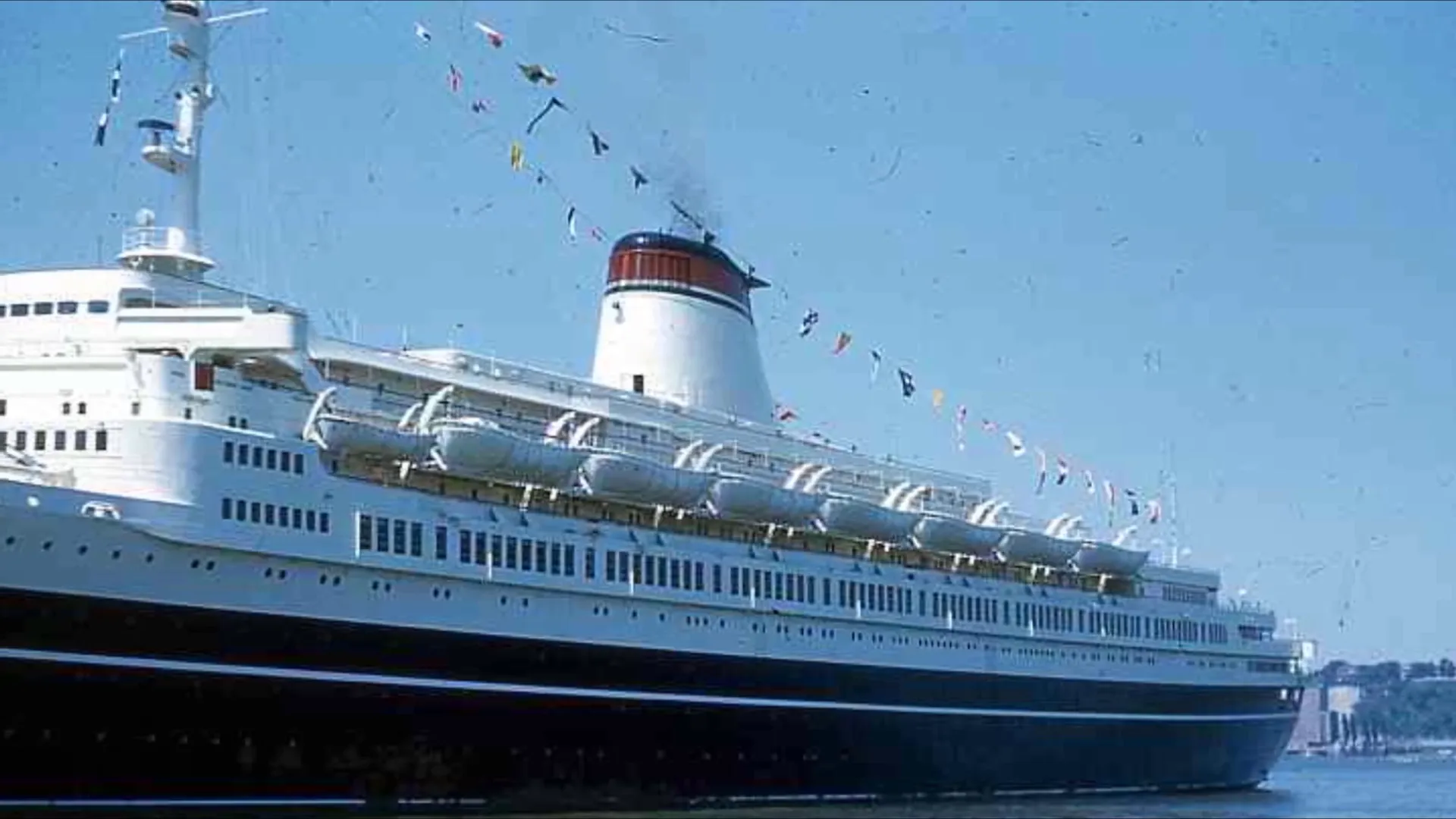
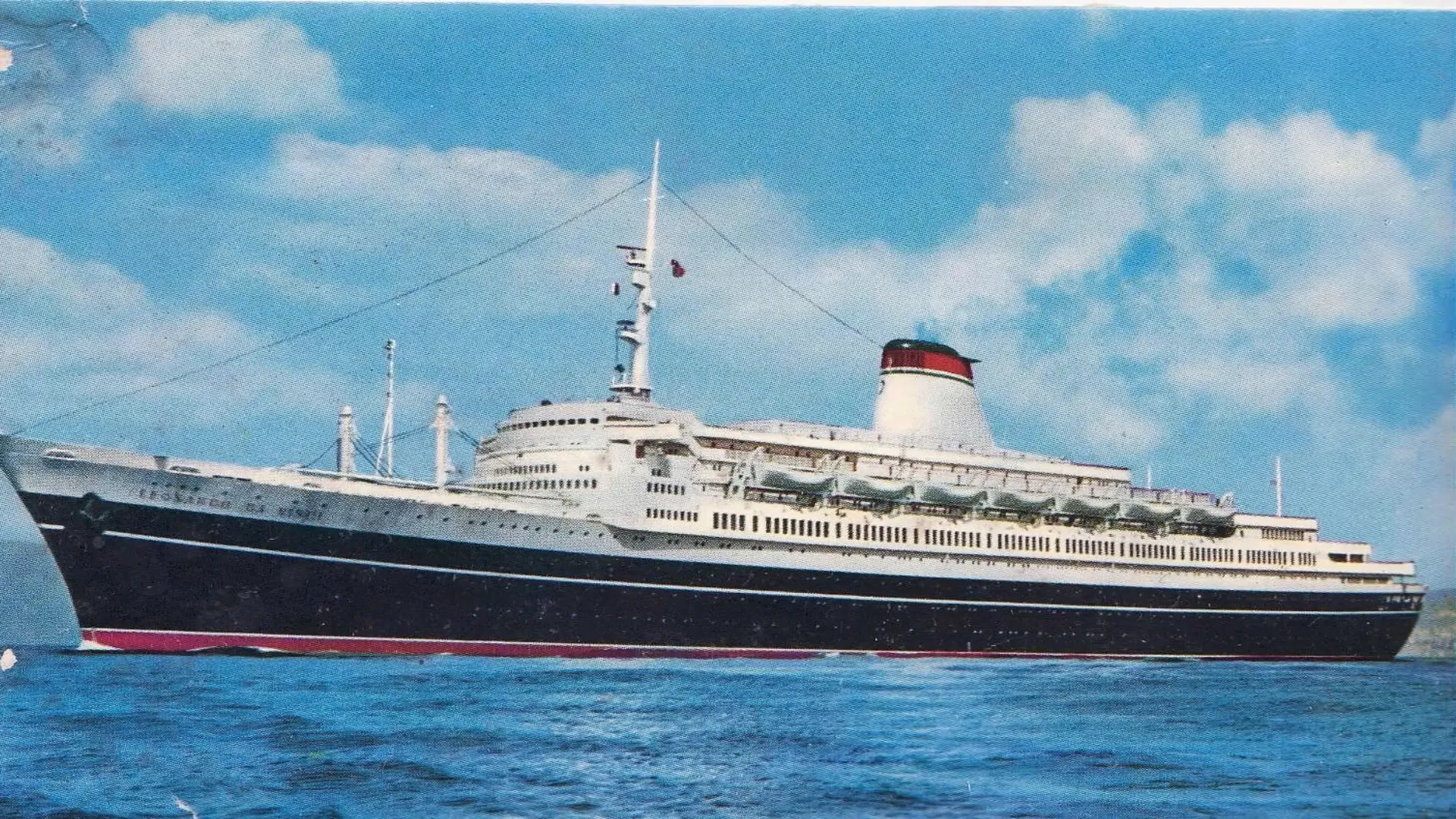
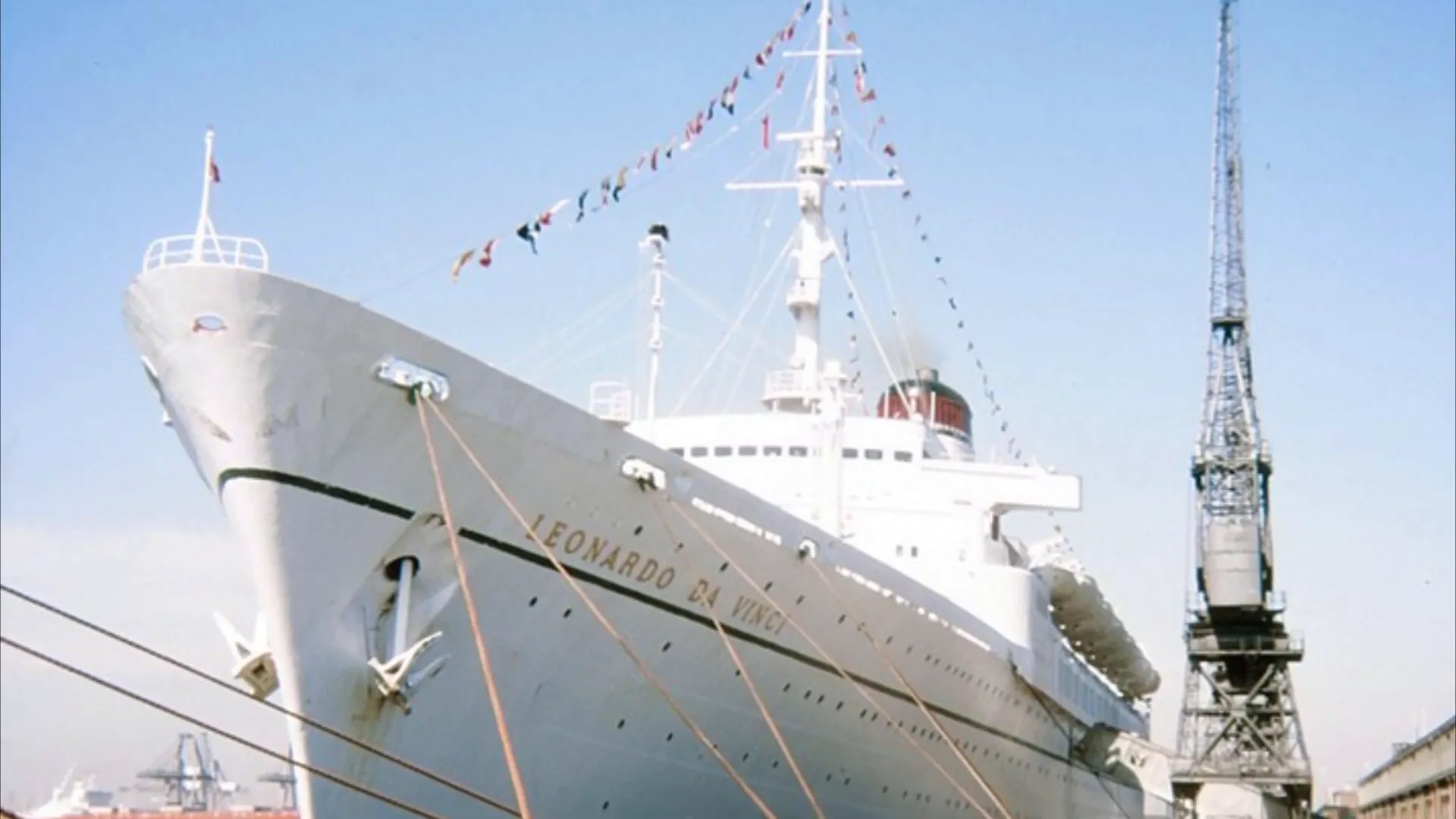
The SS Leonardo da Vinci was constructed at the Ancona shipyard in Genoa, Italy, a location renowned for producing some of the finest liners of the era. Her specifications were impressive: a gross tonnage of 33,334 tons, a length of 232.6 metres, and a beam of 28.1 metres. The design was not only aesthetically pleasing but also innovative, showcasing a larger superstructure and a more spacious layout compared to her predecessors.
Her exterior bore a striking resemblance to the Andrea Doria, yet the Leonardo da Vinci was designed to be slightly longer and more robust. The modifications included enhanced watertight bulkheads and motorised lifeboats, which could be launched even in adverse conditions. These features reflected a significant shift towards prioritising passenger safety in ship design.
Innovative Features of the Leonardo da Vinci
The Leonardo da Vinci was a pioneer in luxury and comfort, boasting numerous innovations that set her apart from other liners. She featured infrared heated swimming pools exclusive to first-class passengers, retractable stabiliser wings, and full air conditioning throughout. The ship was also equipped with private bathrooms in all first-class and cabin-class cabins, enhancing the passenger experience.
One of the most groundbreaking features was her design for potential conversion to nuclear power, which influenced the layout of her interior spaces significantly. The dining rooms and galleys were relocated to accommodate the reactor, demonstrating forward-thinking in maritime engineering.
Launch and Maiden Voyage
The Leonardo da Vinci was launched on December 7, 1958, with a grand ceremony attended by dignitaries and members of the Italian public. Christened by Carla Groni, the wife of the Italian President, the event marked a significant moment for the Italian Line as they sought to reclaim their place in the transatlantic travel market.
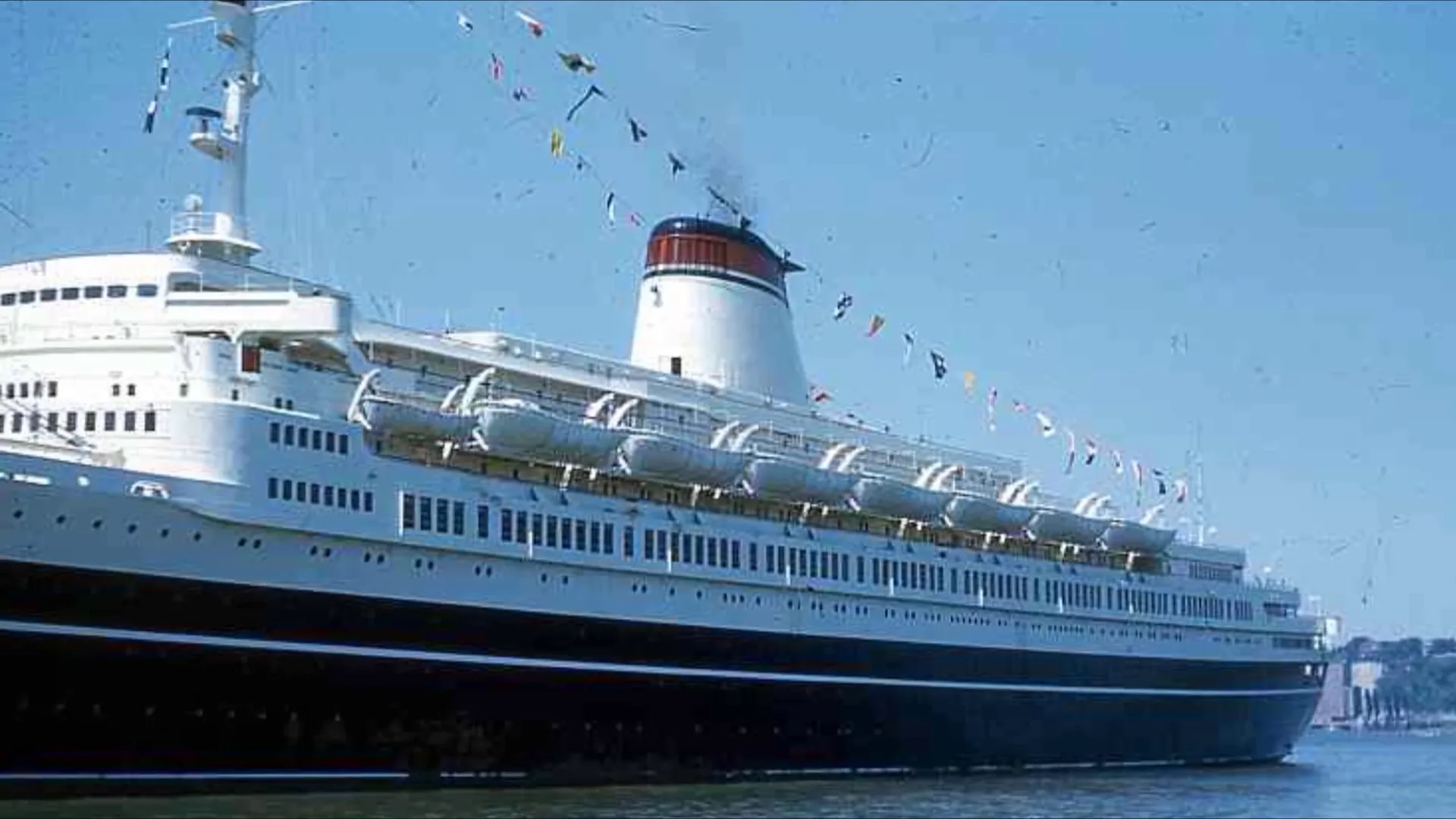
Her maiden voyage commenced on June 30, 1960, from Genoa to New York City, where she was welcomed with the traditional fanfare reserved for debuting liners. The excitement surrounding her launch and the hope for her success were palpable, as she represented not just a ship, but the rebirth of a proud maritime tradition.
Operational Challenges and Modifications
From her maiden voyage, the SS Leonardo da Vinci encountered operational challenges that would shape her service life. Despite her impressive design and technological advancements, the ship struggled with stability issues, particularly in rough seas. This was not entirely unexpected, given her larger size compared to predecessors like the Andrea Doria.
To address these stability concerns, the Italian Line made a significant decision to add 3,000 metric tons of iron to the ship’s hull. This modification aimed to enhance her stability but inadvertently resulted in an excessively heavy vessel, straining her engines and leading to high fuel costs. The balance between safety and operational efficiency became a persistent challenge throughout her service.
Transition to Cruise Service
As the 1960s progressed, the landscape of transatlantic travel began to shift dramatically. The rise of air travel led to a decline in passenger numbers on ocean liners, including the Leonardo da Vinci. Recognising this trend, the Italian Line pivoted her service primarily towards cruising.
Initially, the ship was used for Mediterranean cruises, but her size and the cost of operation made her less suitable for this type of service. Many of her tourist class cabins remained underutilised, as they were deemed too basic for the cruise market. This lack of profitability prompted further adjustments in her operational strategy.
In 1966, the ship underwent a significant repainting, adopting the Italian Line’s new livery, which featured a white hull with a green decorative band. This change was part of a broader effort to refresh her image as a cruise ship rather than a transatlantic liner.
Final Days and Tragic End
Despite attempts to maintain the Leonardo da Vinci’s operational relevance, her service was not to last. By the mid-1970s, the Italian Line made the difficult decision to withdraw her from the North Atlantic service, as competition from air travel became increasingly fierce. She briefly resumed her original route but was ultimately laid up in June 1976.
In 1977, the ship was reintroduced under the banner of Italian Line Cruises, operating short cruises from Miami to Nassau. However, the vessel proved too large and costly for such operations. Her operational challenges culminated in her return to La Spezia in September 1978, where she was laid up for the final time.
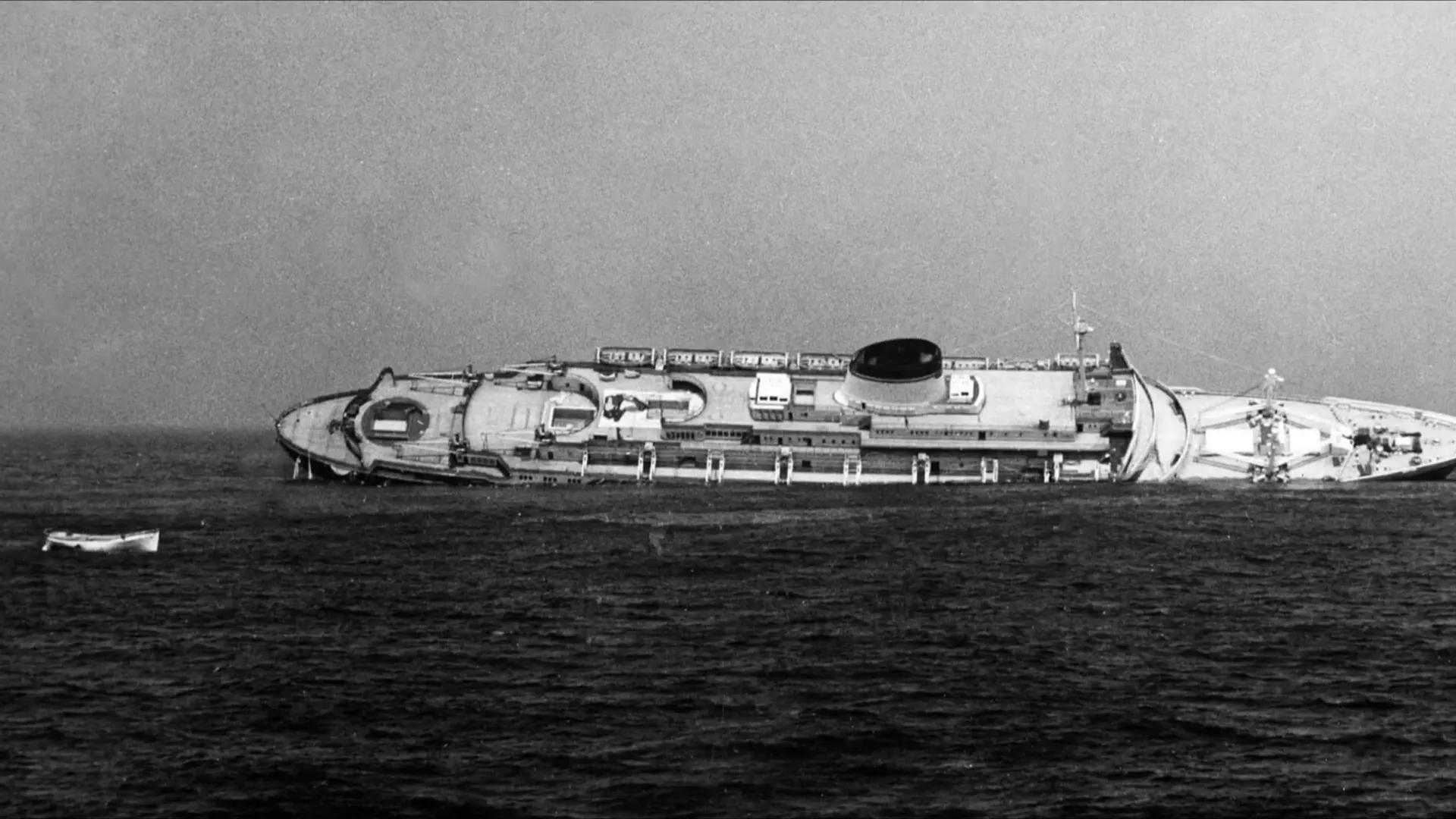
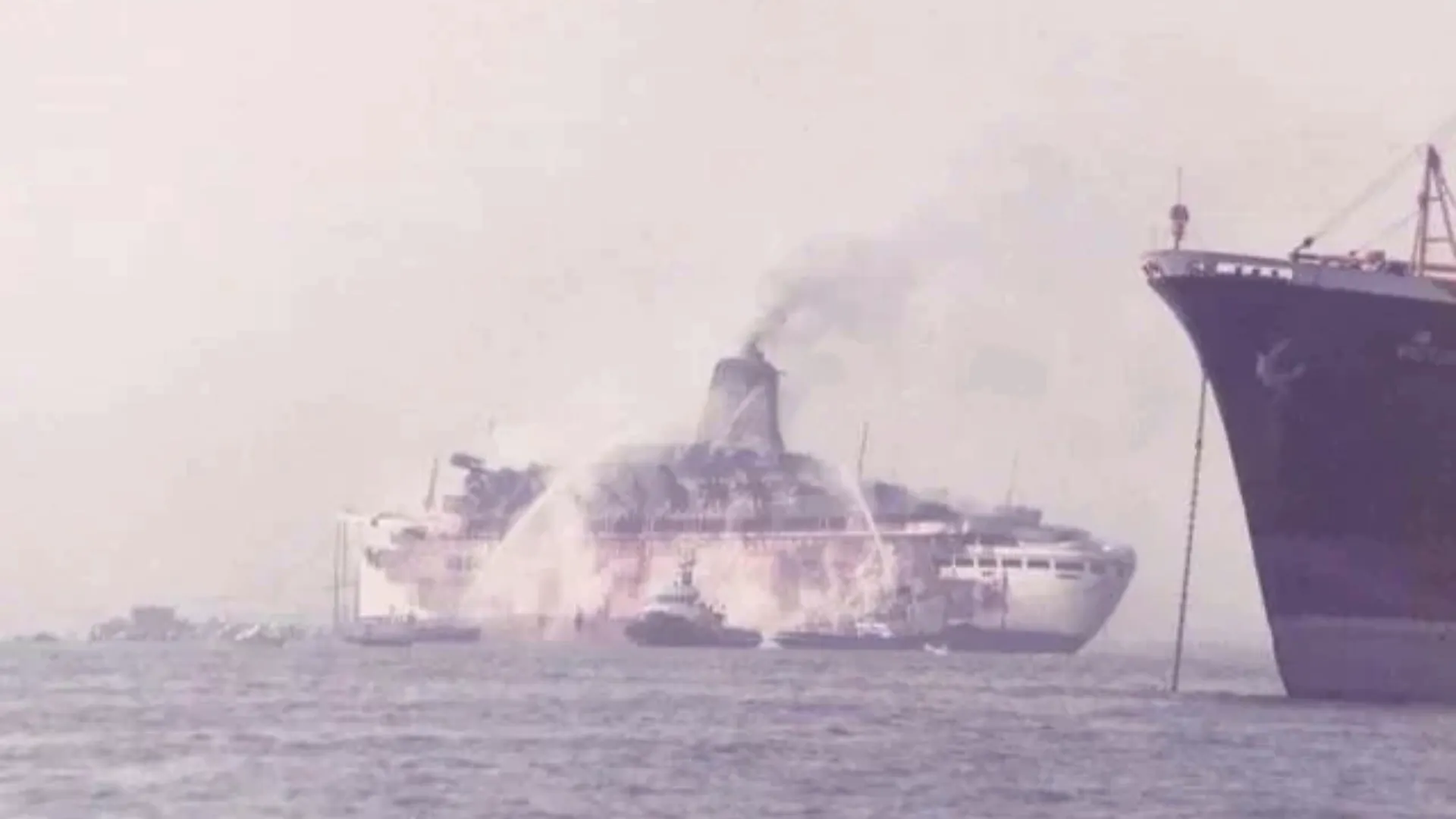
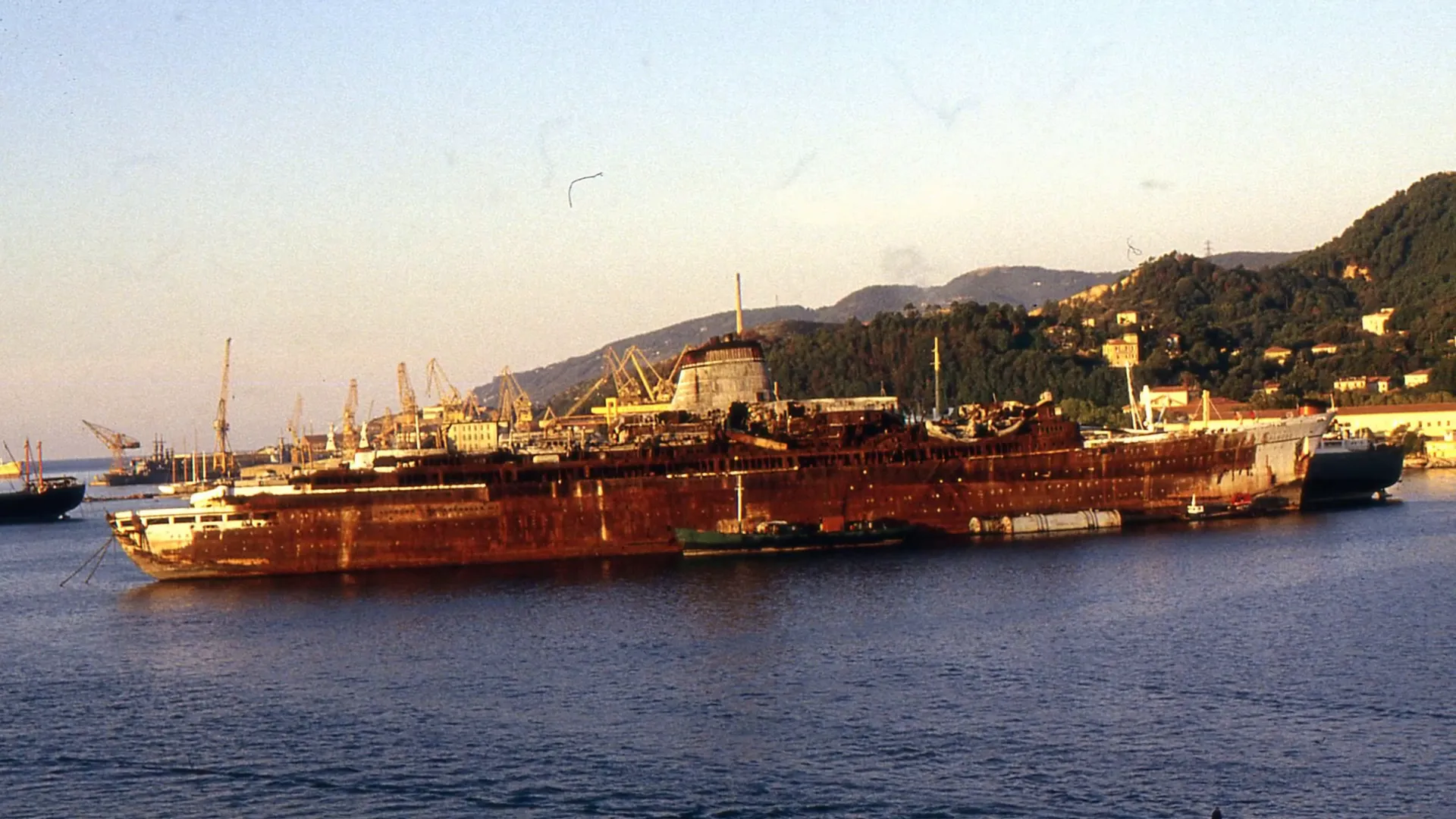
Tragedy struck on July 4, 1980, when a fire broke out onboard. The blaze raged for four days, ultimately leading to the capsizing of the once-magnificent liner. The SS Leonardo da Vinci was declared a total constructive loss, marking a heartbreaking end for a vessel that had once symbolised the pinnacle of Italian maritime achievement.
Legacy of the SS Leonardo da Vinci
The legacy of the SS Leonardo da Vinci is one of both innovation and melancholy. As the last Italian Line passenger liner to sail across the North Atlantic, she represented the end of an era in transatlantic travel. Her design and features paved the way for future passenger vessels, highlighting the importance of safety and comfort.
Though her operational life was marred by challenges, the ship’s impact on maritime design and passenger experience remains significant. The innovations introduced during her construction, such as the water desalination plant and potential for nuclear power, reflect a forward-thinking approach to shipbuilding.
Today, the SS Leonardo da Vinci is remembered not just for her tragic end, but for her role in the evolution of ocean liners and the maritime industry’s resilience in the face of changing travel preferences.
Frequently Asked Questions
What was the SS Leonardo da Vinci’s original purpose?
The SS Leonardo da Vinci was built to replace the ill-fated SS Andrea Doria and serve as a transatlantic passenger liner for the Italian Line, symbolising the revival of Italian maritime tradition after World War II.
Why did the SS Leonardo da Vinci transition to cruise service?
With the decline in transatlantic passenger numbers due to the rise of air travel, the Italian Line shifted the ship’s focus to cruising to maintain profitability and relevance in the changing market.
What were some unique features of the SS Leonardo da Vinci?
Notable features included private bathrooms in most cabins, infrared heated swimming pools for first-class passengers, retractable stabiliser wings, and the potential for conversion to nuclear power.
What ultimately led to the SS Leonardo da Vinci’s demise?
After being laid up for two years, a devastating fire broke out on July 4, 1980, leading to her capsizing and eventual scrapping, marking a tragic end for the once-elegant liner.


